
This is usually the first question a business owner asks once they decide to invest in SEO and it is a fair one. Unlike a paid ad that can bring traffic within hours, SEO works differently. It builds gradually, and the timeline depends on several factors specific to the business, the industry, and the current state of the website.
Some businesses in Chennai expect first-page rankings within a month. Others assume SEO takes years and give up too early. Neither expectation is accurate. Understanding the real timeline helps set the right expectations and avoid abandoning a strategy just before it starts working.
Why SEO Doesn't Work Like Paid Ads
Paid advertising works on an auction system, and the ad appears immediately. SEO works differently. Search engines need time to crawl a website, understand its content, evaluate its relevance, and compare it against competitors already ranking for the same terms.
This means SEO involves three overlapping processes: technical improvements to the website, content that answers what people are searching for, and building genuine authority and trust signals over time. Each of these moves at its own pace, which is why results appear gradually rather than instantly.
A Realistic Month-by-Month Breakdown
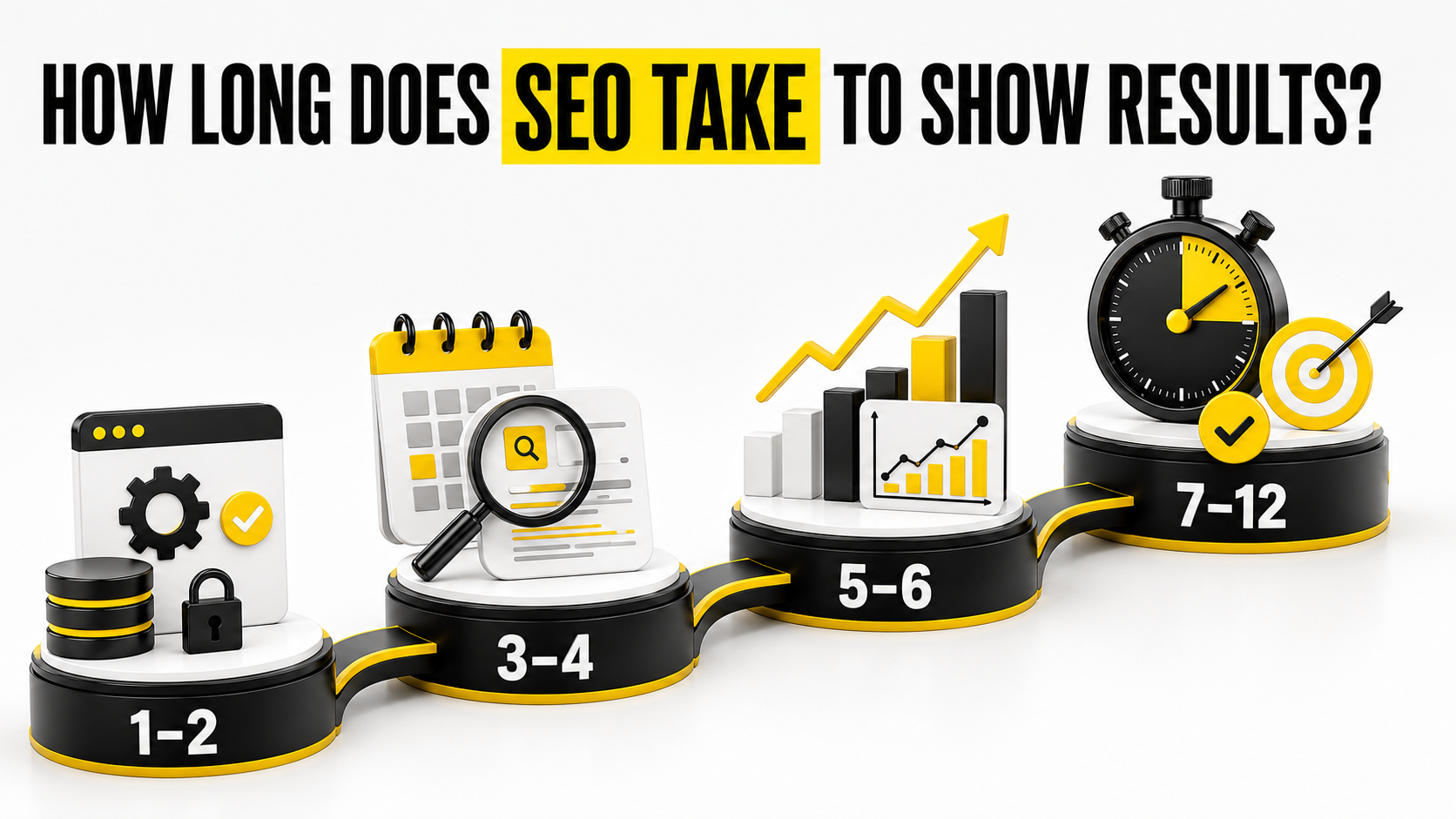
Month 1-2: Foundation and setup This stage focuses on fixing technical issues, improving website structure, setting up tracking (Google Analytics, Search Console), and researching the right keywords for the business. Visible ranking movement is minimal here; this is groundwork, not growth.
Month 3-4: Early signals Search engines begin indexing updated pages and new content more actively. Some keywords, especially lower-competition ones, may start appearing on page 2 or 3. Organic traffic may show a small, steady increase.
Month 5-6: Noticeable movement This is usually when a business starts seeing real changes, a few keywords reaching page 1, increased impressions in Search Console, and a gradual rise in enquiries from organic search. Content published in earlier months starts gaining traction.
Month 7-12: Compounding results With consistent work, rankings for competitive keywords improve further, organic traffic becomes a reliable source of enquiries, and the website starts building genuine authority in its industry and location. This is typically when SEO shifts from "an experiment" to "a dependable channel."
These timeframes are general guidance, not a guarantee the actual pace depends on several factors specific to each business.
What Affects How Fast SEO Works
Website age and existing authority. A domain that has existed for years with some backlinks will usually move faster than a brand-new website starting from zero.
Competition in the industry and location. Ranking for "SEO services in Chennai" is far more competitive than a niche, specific service in a smaller area. Competitive terms take longer.
Current technical health of the website. A site with broken pages, slow loading speed, or poor mobile experience needs to fix these basics first, which can add time before content-related SEO starts showing effect.
Content consistency. SEO responds to consistent publishing and improvement, not a one-time effort. A business publishing quality content monthly will typically see faster and more stable growth than one that publishes occasionally.
Backlinks and local signals. Genuine mentions, citations, and links from relevant Chennai-based or industry-specific sources help build trust faster than generic, low-quality link building.
Businesses working with a structured approach as outlined in Tecminion's SEO services in Chennai tend to see more predictable timelines because technical fixes, content, and authority-building happen in the right sequence rather than randomly.
Why Rushing SEO Can Backfire
Some agencies promise fast rankings using aggressive tactics keyword stuffing, low-quality backlinks, or duplicate content across multiple pages. These can occasionally produce short-term movement, but search engines are built to detect and penalise this over time.
A ranking gained through shortcuts is usually lost just as quickly, sometimes along with a broader penalty that affects the whole website. Sustainable SEO growth is slower, but it holds.
How to Know SEO Is Actually Working, Even Before Rankings Show It
Rankings are not the only indicator of progress. Early signs that SEO is on track include:
-
Search Console showing increasing impressions, even before clicks grow significantly
-
New keywords starting to appear in search results, even outside page 1
-
Improved website loading speed and mobile usability scores
-
Growing number of indexed pages
-
Early backlinks or mentions from relevant sources
These signals typically appear before major ranking jumps and are a useful way to judge progress during the first few months.
Setting the Right Expectation With an Agency or Team
Before starting SEO, it helps to align on a few points:
-
What does progress look like at 3 months, 6 months, and 12 months?
-
Which metrics will be tracked: impressions, rankings, traffic, or enquiries?
-
How will technical issues be identified and prioritised?
-
What is the content publishing plan, and how consistently will it be followed?
A clear answer to these questions upfront prevents the common frustration of expecting page-1 rankings in month one.
Frequently Asked Questions
Can SEO show results faster than 3 months?
For low-competition keywords or smaller local searches, some movement can appear earlier. For competitive industry terms, meaningful results usually take longer.
Does a new website take longer to rank than an older one?
Generally, yes. A new website needs time to build authority and trust signals that an established website may already have.
Is it normal to see no change in the first month?
Yes. The first month is mostly technical setup and research, so visible ranking changes are minimal during this stage.
What happens if SEO work stops after a few months?
Rankings built through SEO can decline gradually if content and technical maintenance stop, especially in competitive industries.
Is SEO a one-time project or an ongoing process?
SEO works best as an ongoing process. Search engines and competitor websites keep changing, so consistent work helps maintain and improve rankings over time.
Want a realistic SEO timeline for your business? Talk to Tecminion about where your website stands today and what to expect.